Tuesday, 29 December 2015

Family Guy Postmodernism

Family Guy and Postmodernism:
The television case study which I have chosen is Family Guy because it is a very postmodern text and is created by Seth Mcfarlane who created my film case study Ted 2.
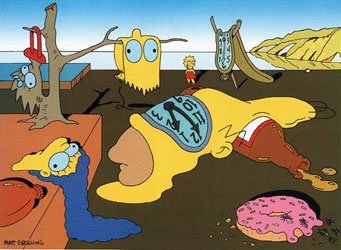
Television represents the cultures of the world and display some of the postmodern traits which would also dominant other art forms. For example pastiche is often used in TV to pay tribute in a tongue- in- cheek way to some pop cultures a good example of this is The Simpsons as it often uses pastiche to pay tribute to certain art forms. Furthermore spectacle is used by some TV shows which is a postmodern trait, these types of programmes would battle for viewers by doing things to get their attention. An example of a spectacle show is Jeremy Kyle show because they set up guests to fight and embarrass themselves in bad situations. Next is Faux TV this is a programme which mocks other shows and produces fake new, for example The Office mocks a standard office workplace and follows a bad boss in awkward reality TV moments. Another aspect of postmodern TV is mystery this involves the search for the unknown involving spirituality, philosophy and technology, a good example of this is Lost and The X-Files. Lastly another aspect of Postmodern TV is the anti-hero which is postmodern as it blurs the lines between what is good and evil and what is black and white for both characters and viewers. A good example of this is breaking bad. This explains why so many shows can be classed as postmodern. My opinion on television and postmodernity is that any programme can be classed as postmodern because most of them have at least one of the traits of postmodernity however examples such as The Simpsons and Family Guy aim to be a lot more postmodern than other programmes. However because there is such a wide range of postmodern programmes I don’t think it can constitute as being a whole genre because a variety of different TV shows have postmodern traits just all in different ways, there isn’t one set rules which shows have to follow to be classed as postmodern. In addition to this I feel that postmodernity in television shows will remain a popular thing because by using it makes the programme stand out a lot compared to if it didn’t. For example if popular shows such as Family Guy and The Simpsons didn’t follow postmodernity and ideas like the American dream then audiences wouldn’t be able to engage and connect  with them half as much as they do.
Family Guy:
Family Guy is a American adult animate television programme, it is created by Seth Macfarlane and produced by: Fuzzy Door productions, Fox Television animation and 20th Century Fox Television. It was distributed by 20th Television. It was originally released on Fox in America and currently being aired BBC Three. There average amount of viewers per series is about 7.9 million. Family guy have a section on the Fox website which provides fans with episodes, clips, pictures, tells them latest news, when it will next be aired and has a shop to buy merchandise. http://www.fox.com/family-guy
The programme focuses on the Griffins family which consists of parents Peter and Lois; their children Meg, Chris, and Stewie; and their talking pet dog Brian. The show is set in the fictional city of Quahog, Rhode Island, and exhibits much of its humour in the form of cutaway gags that often related to American culture. It was first aired in 1998 as a seven minute pilot, Seth Macfarlane was the creator of it and also plays the voices to most of the main characters in the programme.
It has released many different media products such as: comic books, books, a film has been announced but Macfarlane delayed it to work on Ted 2, a Family Guy spin off has been created in the Cleveland Show,  a video game has been released, many of the main characters has featured in other animated TV shows a live performance has also happened.
Crossover with Simpsons review:
The target audiences for postmodern television programmes usually like programmes because they are weird, parody something which they would experience on a day to day basis or something which causes controversy. However many people rebel againt’s postmodern shows because of what they do, for example many feminists disagreed with most of Top Gears views however this just made it more popular with their target audience.
Audience:
In the case of Family Guy the target audience is predominantly young adults who like to watch controversial programmes, furthermore they also use pastiche which is a very postmodern thought as they often pay tribute to things which have happened in the media outside of the programme familiar to the way which The Simpsons does. Furthermore Family Guy also basis itself on a normal everyday life however breaks the boundaries of this by having a range of types of characters, for example the dog and baby talks and are more intelligent to the older characters, however they also follow the stereotypes of a American family because the dad goes to work and gets all the money in for the house while the mum stays at home.
Genre:
Genre covers the generic conventions of one particular sub-genre, it also includes ideas about how the genres have developed over time, also institutions use the genre to target specific audiences. The show is a family sitcom which revolves around a family of a husband, wife, children and a dog. The show usually is about mis-happenings to the characters and normally this is resolved within the episode. It uses flashbacks a lot which usually start with ‘I remember when’ and ‘it’s like the time’which then is followed by the flashback of another time in their life or in history.
Family Guy is a famous postmodern text and as a result has created many famous postmodern moments, for example in 2014they mocked the real estate industry while it was struggling which is postmodern because they are trying to cause controversy just for the sake of it. Furthermore it includes many references to popular culture such as other programmes, brands and celebrities. For example in one programme they merged with The Simpson’s which shows how they expect the audience to be similar with The Simpsons because it is similar to Family Guy. They also are able to blur the boundaries between what they feel is real and what is not, for example the characters talk about things in the world which is happening however use hyper reality by traveling in time and into different dimensions. Also the idea that Stewie the baby and Brian the dog can talk fluently is un normal which makes the audience think it is far from normal. Each programme which is produced normally doesn’t link so they normally mock media forms such as films and shows, for example they mocked Star Wars with a parody episode which have the same story as Star Wars but their own characters and take on it.
The episode which I am going to focus on is The Simpson’s Guy which is a crossover between Family Guy and The Simpsons this has many different postmodern moments, for example product placement is with the idea of the beer which they drink because they first of all take about the beer which is used in Family Guy for it to be then be explained as the same as Duff just with a sticker on. Furthermore they reference many famous films when they jump over the huge canyon they are parodying the film Evel Knievel which is famous for the main character Robbie Knievel jumping over the grand canyon, which the main characters do in the episode of The Simpsons Guy.

Friday, 27 November 2015

Ted 2 Postmodern Presentation

http://www.slideshare.net/SimonCheshire/ted-2pptx-postmodern


Ted 2:

The film is directed and stars Seth McFarlane, the film is also written by him, Alec Sulkin and Wellesley Wild who all write for the American TV series of Family Guy which is a very famous postmodern text.

The film was released on June 24th 2015, it was distributed by Universal Pictures, had a budget of $68 million which was mainly spent on the CGI for Ted himself who is the main character.  It is obviously the sequel to the film Ted which was a huge success critically and commercially however Ted 2 received mixed reviews from critics but still made $215.7 million at box office.

Due to the connections with Family Guy and the fact that the film is Seth Mcfarlane’s creation many people are constantly comparing the film to Family Guy.

Furthermore the storyline is also being compared because many Family Guy fans feels that the plot of Ted 2 is very familiar to the Family Guy episode ‘Brian Portrait of a Dog’ which is where Brian has to go to court where he fights for the right to be called a human rather than an animal, this is similar to Ted 2 because he has to go to court to fight that he is a human not property. Many of the jokes throughout the film have been re used by Seth Mcfarlane from Family Guy, for example the scene where Johnny slips into a sperm donation shelf has been copied from Family Guy as Peter is seen doing the exact same thing.


Many people feel that Ted 2 is a live action version of Family Guy considering the huge similarities between them all, Mark Kermode of the film feels that some of the jokes which are included in the film would be more appropriate and perhaps funnier if they were included in an episode of Family Guy rather than Ted.

Why it is Postmodern:

Reference of Cowboy Twitty uses pastiche as it is parodying and celebrating old TV shows. Which uses Jameson’s theory because it could be classed as laziness by Mcfarlane that he is just parodying a old TV show however it could also be good as he is paying tribute to the old show Cowboy Twitty.

The idea of a talking teddy bear that does drugs and is married is postmodern in itself because it is the weird for the sake of being weird; throughout the film Ted also takes the mick out of the fact that he is a teddy bear which is a good use of self-referencing. 

Good product placement is used throughout the film because Ted is made by Hasbro the film is constantly promoting this and has a scene devoted to it.

Baudrillard’s idea of hyperreality is also used in the film through the plot because Ted constantly says how he wished everyone had equal rights so they are able to live their lives the way they want to, this uses hyperreality because it is creating the perfect world and society which he would like to live in.

Monday, 9 November 2015

Postmodern exam essay

Postmodernism rejects the idea that one media text or product is of more value than something else, postmodernist’s feel judgements aren’t of value it’s purely down to taste and opinion. Postmodernism started due to the pressure, scrutiny and debate which modernism had come under.
There are many differences between modernism and postmodernism, first of all modernism has very clear boundaries between what modernists feel should be classed as art, literature and music, whereas in contrast postmodernism feels anything can be interpreted as art it is merely down to a individuals taste and opinion.  

Furthermore another key difference is postmodernism reflects society’s feelings a lot more and portrays what is happening in the current social time, whereas modernism has a huge hierarchy order and is more about everything being in one set way rather than changing and adapting to what society wants.

Music videos are very postmodern texts for a variety of different reasons. First of all the use of pastiche is very postmodern because the video may try to parody something which was iconic, the video could either be mocking it or paying tribute to it. Another feature which makes music videos very postmodern which is commonly used is self-references this is where the artist may mention in the video something which has become famous within the media world. For example in Lady Gaga’s music video for the song ‘Telephone’ a self-reference of ‘I knew she didn’t have a dick’ was used to destroy the rumours in the media that Lady Gaga could quite possibly be a transgender. Next is bricolage this is where something may be weird and crazy to help create a new image for the artist. For example Miley Cyrus created the video ‘Wreckin Ball’ to create a new image for herself and get away from the Hannah Montana stereotype which had already been created.  Furthermore intertextuality is used to help parody or pay tribute to something which has already happened in the media.

Jean Baudrillard and his theory of hyperreality also helps create very postmodern music videos. For example Katy Perry’s ‘California Dream’ is about creating her perfect world, this is her ideal reality so has used Baudrillard’s idea of hyperreality to help represent this similar to the film ‘The Matrix.
The music video which I have chosen to analyse as a postmodern text is Robin Thicke’s ‘Blurred Lines’ this was a very controversial video and song and as a result many feminists protested againt’s it as they felt it promoted the idea of rape as a positive thing, this led to the song being banned in many different countries all over the world and many feminists realising parodies of the song to highlight the fact that the song promotes rape so much. This explains that the video is postmodern because it is very outrageous just try cause controversy.

Furthermore the actual video is very postmodern, first of all it uses the self reference of a # appearing across the screen reading #THICKE this is the main artists name however the close up shot of his crotch area also suggests and is implying his private area is thick and as a result all the women must want it. Next intertextuality is used because farmers are referenced throughout the video. This is done through the use of mise-en-scene such as props, costumes and body positioning. For example one of the male actors (Pharrel Williams) is wearing a farmers hat whilst one of the female actors in the video is holding a toy lamb this refers to sex however the farmers metaphor is significant as it implies how the male actors will look after and tend the females like a farmer would a lamb.
Pastiche and good product placement is also significantly used. First of all pastiche is used to create the feeling of a soft porn video because the lighting and costumes used imply this greatly in addition to this the product placement of ‘Remy Martin Vodka’ also helps portray the idea of Robin Thicke being compared to a playboy which has obviously been done by the director Diane Martel.
Lastly intertextuality is used to portray how females will do anything to get with men, this is shown by them doing many things such as: exercise, wearing sexual outfits and wearing massive high heeled shoes to get them taller, just to help them try and seduce the male actors in the video. This is kind of parodying the times when females had to do everything for the man and didn’t have equal rights meaning they served more of a purpose to men than just compassion and love compared to what would be expected from a normal relationship now. This also links with Laura Mulvey’s theory of the male gauze because the camera shots, body positioning and lighting throughout the video suggests that the female characters are being seduced and will do anything to get with the male artists in the video.


In conclusion I feel music videos will become more and more postmodern as time progresses, this is because some of the main features which you would expect to see in a postmodern video are becoming more and more common, I also feel artists are engaging with social media more through their videos and this will become more and more as a way of engaging people. Lastly music videos are becoming weird and unusual just for the video to be classed as original and give the artists something unique compared to the stereotypical music artists who are becoming more and more common in the world today.

Monday, 2 November 2015

Ted 2

Ted 2 is a American comedy film directed by Seth Macfarlane the same director and creator of the animated series Family Guy. 
It was released on June 26 2015 by Universal Pictures and it is the sequel to the film Ted which was released in 2012. 
The film stars Mark Wahlberg and Seth Macfarlane himself. The story involves Ted fighting for his civil rights when authorities rule that he is property rather than a person, putting him again at risk from his stalker Donny. 
The film wasn't as a successful as the original, however still grossed over has grossed over $213 million at the box office with a budget of $68 million.    
 

Wednesday, 28 October 2015

The Matrix Case study

My case study is The Matrix.
The Matrix is a 1999 science fiction and action film written and directed by Larry and Andy Wachowski, it stars high profile actors such as: Keanu Reeves, Carrie-Anne Moss and Hugo Weaving. It has earned over $460 million at the box office all over the world, it was a so popular within ten years they re-released it as an anniversary special. It was co-produced and distributed by Warner bros studios and Australian Village Roadshow pictures. As a whole it is a very postmodern film, first of all it often references the postmodern theorist Baudrillard and his book to demonstrate that it is a allegory for contemporary experiences, furthermore all the actors within the film had to read his book ‘Simulacra and Simulation’ to gain a good understanding of what he was trying to get across in terms of philosophy and make sure the cast understood the thematic background of the movie they was making.
The film describes a future life, in which reality is the Matrix, this a hyper reality life created by machines to pacify and subdue the human population. Their bodies heat and electrical activity is used by the Matrix as an energy source, as a result of this Neo is draw to rebel againt’s machines throughout the film. It references the Simulacra and Simulation book throughout the whole film, this is significant in different ways for example the movie helps demonstrate that the movie is a allegory for contemporary experience in a heavy commercialised society. This book also actually features within the film as Neo opens a copy of it to use it as a hiding place for his black market software, the directors placed it on a specific chapter to give a specific referential point for the film, the narrative structure of the film is so based on the book it has been described as a conscious validation of Baudrillard’s theory. Furthermore it also uses pastiche very regularly and references to cyberpunk, hacker subcultures, philosophical and religious ideas and uses homage to films like Alice in Wonderland, Hong Kong action cinema and spaghetti westerns.

It has also helped expand and challenge the way films are made, for example the visual effect known as bullet time was a key aspect of the film which allowed the audience the explore a moment progressing in slow motion as the camera appears to orbit around the scene at normal speed. The method used to do this was when a large number of cameras are placed around a object and triggered nearly all at the same time.

This is the scene which I have chosen to analyse:

The scene from the film which I have chosen to analysis is about Morpheus explaining to Neo about the Matrix which they feel exists, this scene is also when Neo and the audience first meet Morpheus as a character. First of all Morpheus explains to Neo that he feels like Alice like he is ‘tumbling down the rabbit hole’ this is postmodern because it references and homages Alice In Wonderland, this is also done further one in this clip to help Neo decide what to because Morpheus explains how he can stay in Wonderland and discover how the deep the rabbit whole is. This is significant in this clip because it explains how curious Neo is however it shows how they don’t have any control over how they fall down the hole. Further on in this scene Morpheus explains how ‘The Matrix is Everywhere’ this represents Baudrillard and his books influence’s because within the book he makes it clear that you are either in or outside the Matrix however you can choose what you want to believe. Lastly he also explains how the world Neo is from is covering him from the truth about the Matrix because they are born into a prison where no one is free to discover the truth. This again relates to postmodernity because it is very crazy and easily links to Baudrillard’s book.

Wednesday, 30 September 2015

Postmodern videos


Bill Kynes- What is Postmodernism?

The video explains how hard postmodernism is to define, the post part of postmodernism is very significant because it explains how postmodernism was a reaction against modernism as post suggests that it came after modernism. Modernism has a certain objective however postmodernism has a huge sense of creativity because everyone's adaptation of it can be different, allowing people t become creative. No one in terms of mankind are in neutral position as no one has a Gods eye view of reality. There is a lot of different perspectives from different social classes, however it has no one answer. Author of texts are no longer significant it’s more about what the audience of the text get from it, the conclusions which they draw is more important than the message the author wants to promote. As a result God is seen not to be significant as no grand story which explains why everything exists in the way that it does, the truth is simply what works for you and what can get others to believe people create their own meaning.

Postmodernism V Moderism

Monday, 14 September 2015

Thursday, 10 September 2015

Postmodern Analysis of Blurred Lines


In the music video of Robin Thicke’s song Blurred Lines many different postmodern ideas are used. First of all it is purely based on Robin Thicke and his sex life, this means there is self-references throughout the video, for example a hashtag appears on the screen throughout reading #THICKE which is a reference towards the thickness of Robin Thicke’s private area and the camera shots of the girls in the video while this hashtag appears is very significant as it shows represents how they must want him because of how good and big his private area is. Furthermore this type of self-referencing is also used at the end of the video because they have balloons which spell ‘Robin Thick has a big D’ which references what has happened outside in the press.
Throughout the video Laura Mulvey’s male gauze theory is perfectly portrayed. For example very bright fleshy type colours are used to exaggerate the exposure of women, furthermore the choreography is also a example of the male gauze because they are dancing in sexy ways and supposed to be seduced by the male characters this shows the male gauze because the audience see’s it from a male perspective compared to the females perspective. The male gauze is also used through the costumes the different characters in the video are wearing, for example female characters are wearing very small tops which are practically see through whereas in contrast the male characters are wearing black suits which suggests that the females are only their for sex and that the male characters are a lot more dominant.
Throughout the music video the female characters are doing many different physical activities, for example in one shot one of them is riding a bike this is a reference to society because it is trying to explain how society feels that females have to have the complete body to be able to get the best men which in this case is perceived to be Robin Thicke. Voyeurism is a huge part of the music video. This refers to the idea of constantly looking to gain sexual pleasure; this has been used throughout the video of Blurred Lines because the opposite sexed characters are always looking at each other in a seductive kind of way. As Andrew Goodwin said females will be objectified through camerawork and editing body shots, this has been done by Blurred lines director drastically to again over sexualise the female characters. The whole music video allows the audience to be invited to want the female and male characters to have sex because of the way both characters are portrayed; this uses pastiche because it is kind of parodying a soft porn movie where they begin to be seduced which will then be followed by sex. Because the female characters are purely objectified for sex and sex only many feminists have released parodies of the music videos in a protest againt’s this song and againt’s society because they feel that it isn’t right that women can be so easily objectified for sex without anyone thinking twice.
Furthermore in mise-en-scene in the video they have used props such as a lamb which is held by one of the female characters next to Pharrell who is wearing a farmer styled hat this is a good intertextual reference because it references the lamb as being innocent and him being dressed like a farmer implies he is going to ‘tend’ to her like a farmer would to a normal lamb, this uses intersexual pastiche referencing because the audience see the sexual message of the lamb rather than it just being another event in the video which isn’t connected and doesn’t have an implied message. The high key lighting which is used throughout the music video implies that everything goes right when men have authority and power compared to when the women do.
The video ends with a two shot of Pharrel going to touch Robin Thicke’s private this is a very quick shot however is very significant in terms that it has been done to try and quickly change the whole message of the music video, to just Robin Thicke is irresistible to everyone rather than just women. This video is very postmodern for many different reasons. For example Blurred Lines music video is clearly breaking all the acceptable rules which would be expected for a music video whether this is through Andrew Goodwin or it is through modernists the set of rules and conventions which are established for a music video are vaguely used however most of them are clearly being broken. Furthermore it is postmodern in the way that it uses intertextuality however it is blatantly sexualising females and using them as objects, which may offend a variety of people. However if the audience see it through the male gauze and that is simply that it may be found as a source of humour.

Wednesday, 9 September 2015

Narrative

Narrative
3 Ways Which Narrative is structured:
The three ways are: Episodic, Circular and Linear.
Episodic: This is where events of the film are told in more chronological order however return to one specific thing. Similar to a way a book is broken into chapters.
Circular: This narrative is a story which starts at the end and tells the story through a series of flashbacks and then goes full circle and returns to the end of the film.
Linear: This is the most basic narrative structure where a story told in the order of which things happen, it goes from beginning to end like it is expected.  May also be referred to ‘cause and effect’.
Narrative Viewpoint:
       Restricted Narrative- This is where the story is told from the characters viewpoint, which makes the audience feel more of a part of it and can help generate more feeling to the narrative. As a result the audience will have to work out situations similar to the way the characters would.
       Omniscient Narrative- This is giving the audience a high perspective so they are able to see a huge amount of things, a lot more than the characters can see, many fight scenes in films would use this. The audience will be able to see characters plotting against others and gives them more information about the story line.
Narrative Time and Space:
Editing can have a huge impact on the narrative of a film. The order of events in a film is created through editing, pace of the scene is also decided in editing. Time has a huge impact on films, time can be stretched so something may last longer and can be cut short so bad parts are cut out.
Gaps in the narrative is called ellipsis, for example when a character travels somewhere or gets dressed you wouldn’t see everything involved unless it’s relevant and the audience accept this as part of the film world rather than the real world.
Time can also be exaggerated to build up tension or drama which would make a particular scene more dramatic etc.
Vladamir Propp:
Propp's theory was written about 80 years ago about Russian stories and are relatable to nearly every film or short film ever made, even though it is so old some of Propp's characters can be applied to many modern film narratives.
Propp's theory has eight main character types these are: the hero, the false hero, the princess, the father (of the princess), the helper, the villain, the donor and the dispatcher.
Each of these character types has a specific role in the narrative. Sometimes one character may take on more than one role. Furthermore it shouldn't be assumed that the princess should be a women or even a human because it could be a goal or reward which they are trying to reach.

Tvetvan Todorov:
       Todorov's devised a theory which looks at the narrative structures according to the different stages of the narrative these five stages are:
       1. The Equilibrium - which is the state of balance in the narrative, where the audience get to understand the characters and their specific situation.
       2. The Disruption - This is when oppositional characters or events are introduced to the story to help it move forward.
       3. Recognizing the distribution - The story develops different events and other characters become involved and more drama occurs within the film.
       4. Trying to repair the disruption - At this point there may be a twist or climax.
       5. The new equilibrium - The distribution or problem is solved and harmony is resolved, however as a result things may have changed.
How it will affect my Short Film:
The narrative theory will have affect my short film in a huge way. For example I can use the episodic structure where the events of my character is told in order however will always return to his dream and goal and how he has to do certain things to reach where he wants to be.
I can use both the main narrative viewpoints to exaggerate my film, for example I can use restricted narrative to give my audience my characters perspective in certain things and also use omniscient narrative to show the challenges he has to overcome from a different perspective and the audience can judge whether he will do it or not.
Narrative time and space will also affect my short film because it can slow certain scenes down to make it more dramatic and also speed it up it skip some irrelevant things, furthermore  ellipsis will be used throughout my short film because it will jump from scene to scene meaning that the audience will assume certain things have already happened.

Lastly the theorists will also affect my short film for example in Propp’s theory he has 8 main character types which affect the short film in my case the hero will be my main character because he is aiming to achieve his goal and showing the audience what they can achieve, furthermore the princess would be reaching the goal in my video by either scoring or reaching the places they want to reach. However the villain in my film will be the mental hurdles my character will have to break through to reach the top.

Saturday, 4 July 2015

Blurred Lines

In the music video of Robin Thicke’s song Blurred Lines many different postmodern ideas are used. First of all it is purely based on Robin Thicke and his sex life, this means there is self-references throughout the video, for example a hashtag appears on the screen throughout reading #THICKE which is a reference towards the thickness of Robin Thicke’s private area and the camera shots of the girls in the video while this hashtag appears is very significant as it shows represents how they must want him because of how good and big his private area is. Furthermore this type of self-referencing is also used at the end of the video because they have balloons which spell ‘Robin Thick has a big D’ which references what has happened outside in the press. Throughout the video Laura Mulvey’s male gauze theory is perfectly portrayed. For example very bright fleshy type colours are used to exaggerate the exposure of women, furthermore the choreography is also a example of the male gauze because they are dancing in sexy ways and supposed to be seduced by the male characters this shows the male gauze because the audience see’s it from a male perspective compared to the females perspective. The male gauze is also used through the costumes the different characters in the video are wearing, for example female characters are wearing very small tops which are practically see through whereas in contrast the male characters are wearing black suits which suggests that the females are only their for sex and that the male characters are a lot more dominant.
Throughout the music video the female characters are doing many different physical activities, for example in one shot one of them is riding a bike this is a reference to society because it is trying to explain how society feels that females have to have the complete body to be able to get the best men which in this case is perceived to be Robin Thicke.
Voyeurism is a huge part of the music video. This refers to the idea of constantly looking to gain sexual pleasure; this has been used throughout the video of Blurred Lines because the opposite sexed characters are always looking at each other in a seductive kind of way. As Andrew Goodwin said females will be objectified through camerawork and editing body shots, this has been done by Blurred lines director drastically to again over sexualise the female characters. The whole music video allows the audience to be invited to want the female and male characters to have sex because of the way both characters are portrayed; this uses pastiche because it is kind of parodying a soft porn movie where they begin to be seduced which will then be followed by sex.
Because the female characters are purely objectified for sex and sex only many feminists have released parodies of the music videos in a protest againt’s this song and againt’s society because they feel that it isn’t right that women can be so easily objectified for sex without anyone thinking twice.
Furthermore in mise-en-scene in the video they have used props such as a lamb which is held by one of the female characters next to Pharrell who is wearing a farmer styled hat this is a good intertextual reference because it references the lamb as being innocent and him being dressed like a farmer implies he is going to ‘tend’ to her like a farmer would to a normal lamb, this uses intersexual pastiche referencing because the audience see the sexual message of the lamb rather than it just being another event in the video which isn’t connected and doesn’t have an implied message.
The high key lighting which is used throughout the music video implies that everything goes right when men have authority and power compared to when the women do.
The video ends with a two shot of Pharrel going to touch Robin Thicke’s private this is a very quick shot however is very significant in terms that it has been done to try and quickly change the whole message of the music video, to just Robin Thicke is irresistible to everyone rather than just women.

This video is very postmodern for many different reasons. For example Blurred Lines music video is clearly breaking all the acceptable rules which would be expected for a music video whether this is through Andrew Goodwin or it is through modernists the set of rules and conventions which are established for a music video are vaguely used however most of them are clearly being broken.  Furthermore it is postmodern in the way that it uses intertextuality however it is blatantly sexualising females and using them as objects, which may offend a variety of people. however if the audience see it through the male gauze and that is simply that it may be found as a source of humour. 

Monday, 8 June 2015

Definition's

Post Modernism: A late 20th-century style and concept in the arts, architecture, and criticism, which represents a departure from modernism and is characterized by the self-conscious use of earlier styles and conventions, a mixing of different artistic styles and media, and a general distrust of theories.

Modernism: Philosophical movement that, along with cultural trends and changes, arose from wide-scale and far-reaching transformations in western society. 

Bricolage: A piece of makeshift handiwork.

Pastiche: A literary musical piece consisting mainly of techniques which are borrowed from other sources.

Aesthetics: The branch of philosophy dealing with such notions as the beatiful, the ugly, the sublime, the comic. As applieable to the fine arts, with a view of establishing the meaning and validity of critical judgements concerning works of art.

Relativism (relativistic): Any theory holding that criteria of judgment are relative, varying with individuals and their enviroments.

Modern's believe- science, religion, philosophy

Key Concepts

Powered by emaze

Prezi: AS Coursework